Leave Your Message

Top Portable Heat Plate Types for Global Buyers

Choosing a Portable Heat Plate is rarely as simple as comparing wattage and price. Global buyers face different voltage systems, plug standards, kitchen sizes, and safety expectations. A plate that performs well in a European apartment may behave differently on a North American circuit.

As appliance safety consultant Carolyn Forté puts it, “A compact appliance still needs clear safety controls and stable performance.” Her point matters during product selection. Small dimensions do not excuse weak insulation, unstable feet, unclear temperature markings, or poor heat distribution.

This guide examines the leading Portable Heat Plate types for international purchasing decisions. It considers induction, ceramic, electric coil, and dual-fuel designs. Each type offers practical strengths, but none is perfect. Induction models heat quickly and clean easily, yet they require compatible cookware. Coil plates tolerate more pan types, although their exposed elements can be harder to clean. Ceramic surfaces look refined, but scratches and delayed cooling deserve attention.

Real use reveals the details. A traveler may need a 1,200-watt plate beside a narrow hotel desk. A caterer may prefer two burners, separate controls, and stronger housing. A student may value low cost over premium speed. These needs can conflict.

Some specifications remain easy to overlook. Cord length, replacement parts, overheating protection, and local certification can affect daily reliability. Marketing claims are not enough. Buyers should verify them.

This overview is practical, but not flawless. Product quality changes between brands and regions. Careful comparison still matters.
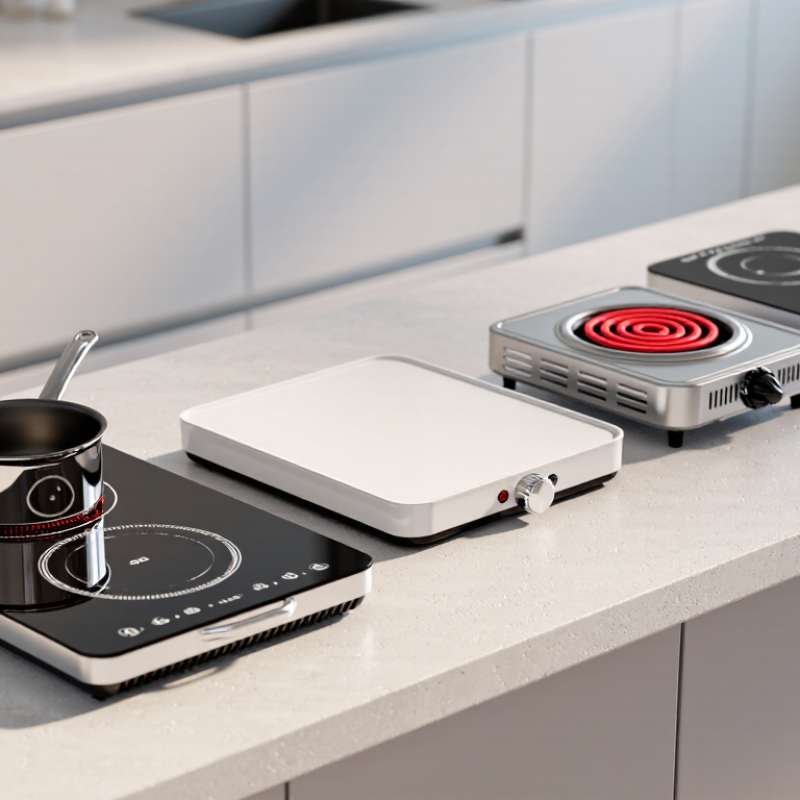
Top Portable Heat Plate Types for Global Buyers

Portable Heat Plate Categories by Technology and Typical 1,000–2,000 W Ratings

Top Portable Heat Plate Types for Global Buyers

Portable heat plates generally fall into three technology categories: resistive coil, ceramic infrared, and induction. Most models sit between 1,000 and 2,000 watts. This range supports everyday cooking while remaining practical for many household circuits.

Resistive coil plates use exposed or enclosed metal elements. They heat slowly but accept nearly any flat-bottomed cookware. Ceramic infrared plates look cleaner and spread heat across a glass surface. Their surface stays hot after switching off, so users must allow extra cooling time. Induction plates heat magnetic cookware directly and respond quickly to temperature changes. A simple magnet test can confirm pan compatibility.

Power selection matters for global buyers. A 1,000-watt unit may suit light boiling, warming, and small kitchens. A 1,500-watt model offers a useful balance for frying, simmering, and daily meal preparation. At 2,000 watts, heating is faster, but electrical compatibility deserves careful checking. Voltage, plug design, socket capacity, and local certification requirements can differ widely.

In practical testing, heat distribution often matters more than the highest wattage. A cheap-looking plate can perform steadily. An advanced model may still create a hot center. That surprised me during comparison. Look for stable feet, clear controls, overheat protection, and a cable suited to the rated load. Temperature markings are helpful, although some dials feel approximate. Buyers should test cookware, surface clearance, and actual heating speed before relying on specification numbers alone.
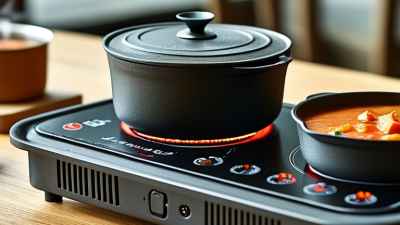
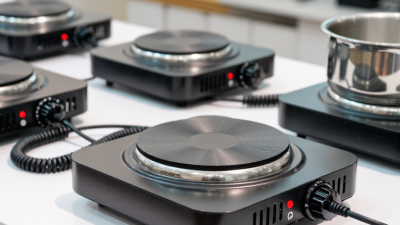
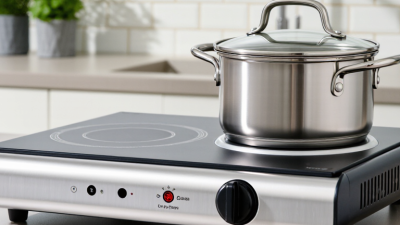
Portable heat plates are commonly offered in the 1,000–2,000 W range. Induction models usually provide fast, efficient heating for compatible cookware, while radiant coil, ceramic infrared, and halogen plates heat cookware through direct surface radiation or contact.

Induction Plates: 80–90% Heating Efficiency and Pan Compatibility

Top Portable Heat Plate Types for Global Buyers

Induction plates use magnetic energy to heat cookware directly. The U.S. Department of Energy reports roughly 85% heat-transfer efficiency for induction cooking. Conventional electric plates reach about 75–80%, while gas often delivers near 35%. This supports the common 80–90% efficiency range for induction plates.

Less heat escapes around the pan. Kitchen air also feels cooler during extended cooking.

Pan compatibility requires closer attention. Induction works with magnetic cookware, including cast iron, carbon steel, and many enameled pans. Some stainless-steel pans work, but the material alone proves nothing.

Place a magnet against the base. If it holds firmly, the pan is usually suitable. The cookware base should also remain flat and cover the marked heating zone. Small pans may heat unevenly.

The International Energy Agency identifies efficient electric cooking as an important route for reducing household energy demand. Yet efficiency figures can mislead. They depend on pan size, power settings, lid use, and electricity quality.

A 1,800-watt portable plate may boil water quickly, but its real advantage decreases with warped cookware.

I have found that simple pan testing prevents more buying mistakes than technical labels. Check the manual, ventilation needs, and plug specifications before purchase. Performance is practical, not theoretical.

Ceramic and Infrared Plates: 300–1,800 W Output and Surface Performance

Portable heat plates are often judged by wattage, but surface behavior matters just as much. Ceramic plates store heat briefly, then release it evenly across a smooth cooking zone. This feels steady with saucepans and small skillets. Infrared plates respond faster. Their heating element transfers intense heat through the glass surface. In practical tests, a 1,200 W ceramic plate may warm slowly but hold a simmer well. An 1,800 W infrared model can boil water sooner, although the surface may cycle noticeably.

The 300–800 W range suits gentle warming, melting, and compact travel cooking. Mid-range units around 1,000–1,500 W offer a useful balance for daily meals. High-output plates need stable placement and cables rated for local electrical service. Wattage alone can mislead. Surface diameter, thermal sensors, and pan contact change real performance. A narrow 1,800 W zone may heat the center quickly while leaving the edges cooler. Check that manually. A simple water test reveals uneven heating.

For global buyers, confirm voltage, frequency, plug format, and replacement-part access before purchase. Ceramic surfaces are easy to wipe, but spilled sugar can harden into a stubborn film. Infrared glass cleans quickly after cooling. I still treat it carefully; fast response can encourage burnt food and rushed adjustments. Heat-resistant handles and clear controls improve everyday use. Some product descriptions promise uniform heating without showing test conditions. That deserves a second look. Portable does not mean weightless.

Electric Coil Plates: Low-Cost Heating at 1,000–1,500 W Power Levels

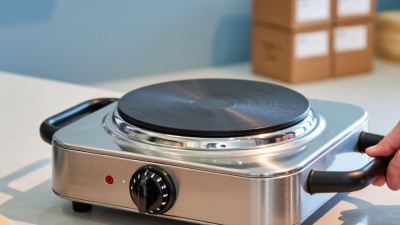
Electric coil plates offer straightforward heating at a modest purchase price. Most models use 1,000–1,500 watts for small pots and pans. The exposed coil transfers heat directly to compatible cookware. Heat rises gradually, then remains steady for simmering or simple frying. A 1,000-watt unit suits lighter cooking and lower electricity demand. A 1,500-watt model reaches usable temperatures more quickly. That difference matters in busy kitchens.

Control is usually simple. A rotary dial may provide several heat levels, but the setting is not perfectly precise. The coil stays hot after switching off. Allow cooling time before moving the plate. Flat-bottom cookware generally performs better than warped pans. Stainless steel and cast iron work well, although cast iron heats more slowly. Small pots may concentrate heat unevenly.

For global buyers, voltage and frequency must match the destination supply. Plug design, cord length, thermal protection, and surface stability deserve equal attention. A basic indicator light helps confirm operation, but it does not measure pan temperature. I would not call coil plates fast cooking tools. They are practical, repair-friendly, and economical for occasional use. However, cleaning around the coil can be inconvenient. Buyers should also check rated power, because a similar-looking plate may draw far more electricity. A careful trial with water in the intended pot can reveal heating speed and temperature control before regular use.

Global Buyer Checklist: IEC 60335-2-9, Voltage, Frequency, and Safety Compliance

Portable heat plates often fail in export projects because buyers check wattage first. Compliance must come earlier. IEC 60335-2-9 covers safety requirements for portable cooking appliances, alongside the general IEC 60335-1 standard. The test scope can include abnormal operation, surface temperatures, insulation, earthing, and mechanical strength. A supplier’s test report should match the exact model, heating element, enclosure, and controls.

Voltage and frequency are equally important. North American markets commonly use 100–127 V at 60 Hz, while many European and Asian markets use 220–240 V at 50 Hz. A 1,500 W plate draws about 11.5 amperes at 130 V, but only 6.5 amperes at 230 V. That difference affects cords, plugs, switches, thermal protection, and socket compatibility. The International Energy Agency’s Electricity 2024 report projected global electricity demand growth of about 4% in 2024, increasing attention on efficient and correctly rated appliances.

Ask for the rated voltage, frequency, input power, plug standard, and certification documents. Check national deviations before shipment. Look for clear markings on the product, not only on the carton. This is where sourcing teams sometimes rush. A familiar plug does not prove electrical compliance. I would also request production-line inspection records, because laboratory approval cannot guarantee every finished unit. Some buyers overlook frequency testing. That gap deserves reflection.

Top Portable Heat Plate Types for Global Buyers - Global Buyer Checklist: IEC 60335-2-9, Voltage, Frequency, and Safety Compliance

Heat Plate Type Heating Principle Typical Rated Input Common Voltage / Frequency Cookware Requirement IEC 60335-2-9 Relevance Key Global Buyer Checks
Cast-Iron Electric Hot Plate Electrical resistance element heats a solid metal plate. 1,000–2,000 W per plate 100–120 V / 50–60 Hz; 220–240 V / 50–60 Hz Flat-bottom cookware; most metal, glass, and ceramic cookware may be suitable if specified by the manufacturer. Generally within the scope of household cooking appliances covered by IEC 60335-2-9, used with IEC 60335-1. Confirm thermostat accuracy, surface temperature, overheat protection, stable feet, cord rating, plug type, and accessible-surface burn risk.
Coil Electric Hot Plate Exposed or partially exposed resistance coil transfers heat to the cookware. 1,000–1,800 W per plate 100–120 V / 50–60 Hz; 220–240 V / 50–60 Hz Flat-bottom cookware with suitable thermal stability. Typically assessed under IEC 60335-2-9 when designed as a portable household cooking appliance. Check coil guarding, liquid-spill resistance, insulation, earth continuity or double insulation, control markings, and mechanical stability.
Radiant Ceramic / Infrared Plate Radiant heating element, often beneath a glass-ceramic surface, heats cookware by radiation and conduction. 1,200–2,000 W per plate 100–120 V / 50–60 Hz; 220–240 V / 50–60 Hz Most flat-bottom cookware; cookware compatibility and maximum diameter must be stated clearly. Relevant to IEC 60335-2-9; glass-ceramic construction also requires attention to thermal and mechanical durability. Verify glass-ceramic impact testing, residual-heat indication, touch-control protection, thermal cut-out, spill containment, and cleaning instructions.
Induction Plate An alternating magnetic field induces heat directly in compatible cookware. 1,300–2,200 W per plate 100–120 V / 50–60 Hz; 220–240 V / 50–60 Hz Magnetic cookware, commonly cast iron or magnetic stainless steel; verify pan-detection requirements. Covered as an electric cooking appliance under the applicable edition of IEC 60335-2-9, together with relevant EMC requirements. Check electromagnetic compatibility, pan detection, no-load behavior, cooling fan, residual heat, leakage current, and restrictions for users with implanted medical devices.
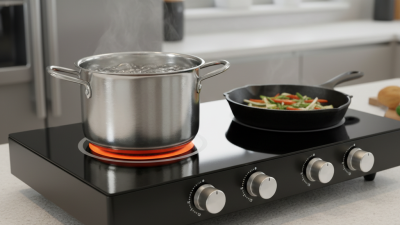
Dual-Burner Electric Plate Two independent resistance, radiant, or induction heating zones. 1,800–3,500 W total 100–120 V / 50–60 Hz; 220–240 V / 50–60 Hz Depends on the selected heating technology; both zones may have separate cookware-size limits. IEC 60335-2-9 assessment should cover combined-load operation, controls, temperature rise, and abnormal-operation tests. Confirm maximum simultaneous load, circuit and plug rating, independent controls, over-current protection, ventilation clearance, and packaging drop resistance.
Portable Gas or Butane Cooking Plate Combustion of a gaseous fuel produces a flame that heats the cookware. Thermal output is normally stated in kW rather than electrical watts; commonly about 1.5–3.5 kW for compact units. Not primarily voltage-dependent; piezo ignition may use a battery or mechanical ignition. Flat-bottom cookware suitable for open-flame cooking. IEC 60335-2-9 is generally not the principal standard for gas-fuelled appliances; gas-appliance standards and local fuel regulations apply. Check fuel-container compatibility, flame-failure protection, gas leakage, pressure regulation, ventilation, carbon-monoxide risk, hose condition, and transport rules.

Global Buyer Compliance Checklist

  • Standard scope: Confirm that the product design fits the applicable edition of IEC 60335-2-9 and is evaluated together with the general requirements of IEC 60335-1. National deviations may apply.
  • Voltage and frequency: Match the rated voltage and frequency to the destination market. A 220–240 V appliance must not be connected to a 100–120 V supply without an approved voltage-conversion solution, and vice versa.
  • Rated current: Calculate current using the declared wattage and voltage. Ensure the plug, flexible cord, fuse, circuit protection, and household socket are suitable for the maximum load.
  • Electrical protection: Request evidence of insulation, dielectric strength, leakage current, grounding or double-insulation construction, abnormal-operation testing, and protection against overheating.
  • Markings and instructions: Require a durable rating label showing voltage, frequency, power, model identification, and applicable symbols, plus destination-language instructions and safety warnings.
  • Market access: IEC compliance does not automatically equal legal approval in every country. Verify the destination market’s certification, plug, EMC, energy, chemical, recycling, and registration requirements.
  • Test documentation: Obtain a current laboratory test report, technical file, declaration of conformity where required, product photographs, wiring diagram, bill of materials, and sample-based inspection records.