+852 60984748
Why Choose a Portable Heat Plate for Global Sourcing? The question reflects changing cooking habits, energy access, and supply-chain needs. The World Health Organization reports that about 2.3 billion people still cook with polluting fuels. The 2024 Tracking SDG 7: The Energy Progress Report confirms that clean-cooking access remains uneven across regions. A Portable Heat Plate cannot solve this challenge alone. However, it can offer a compact electric option for homes, offices, dormitories, outdoor catering, and temporary facilities.
Its practical value becomes clearer during real use. A small plate can fit inside a 40-centimeter cabinet. A hotel worker can move it between rooms. A distributor can store more units on one pallet. These details influence landed cost, packaging design, and after-sales service. Buyers should examine wattage, voltage compatibility, plug systems, temperature control, surface materials, cord quality, and overheating protection. Electrical safety certification must match the destination market. Requirements vary.
The International Energy Agency highlights efficiency, reliability, and affordability as essential parts of modern energy access. Those principles also matter when sourcing portable appliances. A low purchase price may become expensive after returns, damaged packaging, or unavailable spare parts. This is where supplier audits and sample testing provide evidence. Still, product comparisons are not always perfect. Laboratory performance may differ from a crowded kitchen, unstable voltage, or frequent transport. Global sourcing teams should test realistic conditions before placing large orders. The strongest choice balances portability, safety, durability, energy use, and dependable supplier communication.
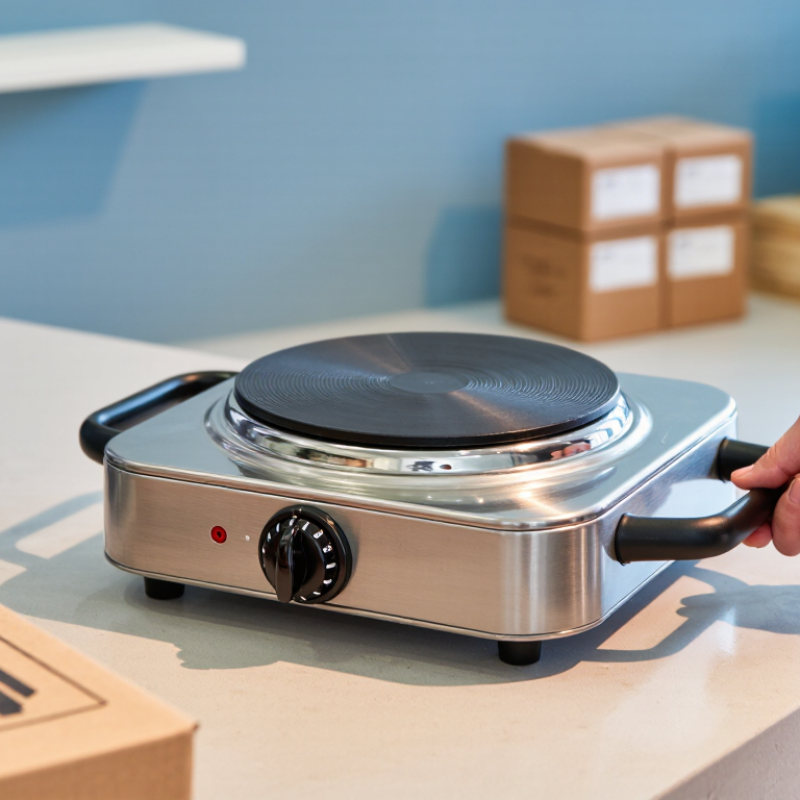
A portable heat plate is a compact electric cooking device with a heated surface, power cord, temperature control, and protective housing. Unlike a built-in hob, it can sit on a table, move between rooms, or support temporary kitchens. Common designs use resistance coils, ceramic heating surfaces, or induction technology. The choice affects heating speed, cookware compatibility, cleaning, and energy use.
The U.S. Department of Energy reports that induction cooking can transfer about 85% of input energy to cookware, while conventional electric cooking typically reaches 75–80%. That difference matters during global sourcing, especially where electricity costs vary. The WHO and World Bank’s Tracking SDG 7 report states that about 2.3 billion people still lacked access to clean cooking in 2022. A portable electric plate may offer a cleaner indoor option where reliable electricity exists, but it is not universally practical.
For buyers, review rated wattage, voltage range, plug configuration, thermal cut-off, surface temperature, and test documentation against applicable safety standards. A 1,500-watt model may heat quickly, yet overload a weak circuit. That detail is easy to miss. Suppliers should also provide cycle-test results, packaging specifications, and spare-part plans. From practical evaluation, the strongest product is not always the fastest one. Stable temperature control and safer handling often matter more than headline power.
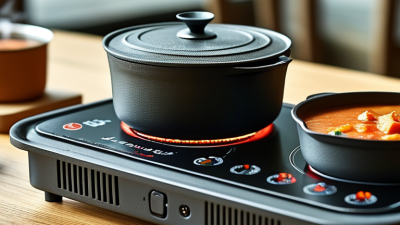
Portable heat plates offer global buyers a practical balance between compact design and everyday cooking performance. Their smaller footprint reduces carton volume, storage pressure, and handling effort. The World Bank’s 2023 Logistics Performance Index shows that supply-chain reliability still varies widely across 139 economies. A lighter product can make uncertain logistics slightly easier to manage.
Energy performance also matters. The U.S. Department of Energy reports that induction cooking transfers about 85% of energy to cookware, compared with roughly 75% for conventional electric resistance. This difference can support lower operating costs for households, hospitality buyers, and temporary food-service settings. It is not magic. Results depend on pan compatibility, power quality, and user habits.
Global sourcing teams should check voltage ranges, plug standards, thermal protection, and local certification requirements before approving a model. A temperature dial, non-slip feet, and a clear heat indicator can reduce training needs. Packaging deserves equal attention; crowded cartons often cause avoidable damage. UNCTAD’s Review of Maritime Transport has repeatedly highlighted disruption risks across international shipping routes, so durable packaging is a purchasing feature, not decoration.
The trade-off is real. More safety controls may increase cost and assembly complexity. Some buyers may prefer a simpler plate, even when it offers less protection. Careful sampling, factory audits, and repeated performance tests remain essential. Specifications look neat on paper. Kitchens are less predictable.
Why Choose a Portable Heat Plate for Global Sourcing?
Essential Features and Technical Specifications
Global sourcing starts with the nameplate, not the product photo. A portable heat plate should state wattage, voltage, frequency, temperature range, and surface size. For many markets, 1,000–1,800 watts balances heating speed and circuit limitations. A 100–240V, 50/60Hz design sounds flexible, but it still needs country-specific plugs and testing. The IEA’s Energy Efficiency 2023 report links rising appliance ownership with stronger electricity demand, making efficiency a practical sourcing concern.
Look for a stable thermostat, thermal fuse, overheat protection, and automatic shutoff. These details matter beside a small hotel kitchenette or testing bench. IEC 60335-1 and IEC 60335-2-9 provide useful safety references for household cooking appliances. Ask for test reports, temperature-rise results, insulation data, and traceable samples. Do not accept a certificate image alone. It may be outdated.
Material choices affect performance and returns. A cast-iron plate stores heat well, while a coated surface usually cleans faster. Confirm plate flatness, handle temperature, cord length, plug type, carton drop testing, and spare-part availability. UNEP’s 2023 Global Status Report for Buildings and Construction reports that buildings consume about 34% of global energy. That figure does not measure heat plates directly, but it reinforces sensible power control. In my sourcing checks, cheaper units often fail on cord quality or uneven heating. I still verify those findings across multiple samples, because one good sample proves very little.
| Category | Specification | Typical Sourcing Value | Why It Matters for Global Sourcing |
|---|---|---|---|
| Electrical Input | Rated voltage | 100–240 V AC, depending on the target market | A model designed for a specific voltage region improves electrical compatibility. Universal-voltage models require suitable internal design and testing rather than a simple plug change. |
| Electrical Input | Frequency | 50/60 Hz or market-specific configuration | Checking frequency compatibility helps prevent overheating, inaccurate control, or reduced service life in different countries. |
| Heating Performance | Rated power | Approximately 500–1,500 W for compact household units | Higher wattage generally provides faster heating but increases current draw, packaging requirements, and transport considerations. |
| Heating Performance | Temperature control | Adjustable dial or electronic control; commonly from low heat to approximately 500–600 °C surface temperature, depending on heating technology | The required range should match the intended use, such as warming, simmering, laboratory heating, or light-duty food preparation. |
| Heating Technology | Heating element | Electric coil, cast-iron plate, ceramic radiant element, or induction system | Coil and cast-iron designs are generally economical and durable. Ceramic surfaces are easier to clean, while induction requires compatible cookware and suitable electronic controls. |
| Heating Surface | Usable plate diameter | Approximately 100–200 mm for compact portable models | The surface size affects cookware compatibility, heating uniformity, product footprint, and carton dimensions. |
| Heating Surface | Surface material | Cast iron, stainless steel, glass-ceramic, or heat-resistant coated metal | Specify resistance to corrosion, thermal shock, staining, and repeated cleaning. The surface should be suitable for the intended cookware and operating temperature. |
| Temperature Control | Control resolution | Stepped settings, rotary thermostat, or digital adjustment | A thermostat or electronic controller offers more consistent heat management than a simple on/off switch. |
| Safety | Overheat protection | Thermal fuse, resettable protector, thermostat, or electronic temperature monitoring | Independent overheat protection reduces risk during blocked ventilation, empty operation, or prolonged use. |
| Safety | Power indicator | Illuminated indicator or digital display | A clear indicator helps users identify when the unit is energized or still operating, reducing accidental contact with a hot surface. |
| Safety | Non-slip support | Rubber or silicone feet with heat-resistant construction | Stable feet reduce movement on smooth countertops and help maintain clearance for ventilation. |
| Construction | Housing material | Stainless steel, painted steel, aluminum, or heat-resistant polymer | Material selection influences durability, surface temperature, corrosion resistance, appearance, and total product weight. |
| Portability | Typical product weight | Approximately 1.0–3.5 kg for single-plate models | Lower weight can reduce shipping cost and improve portability, while heavier plates may offer greater stability and heat retention. |
| Portability | Typical product footprint | Approximately 220–350 mm wide and 220–350 mm deep | Compact dimensions support easier storage, retail display, export packaging, and use in small kitchens or temporary work areas. |
| Usability | Cord length | Commonly 1.0–1.5 m, subject to local requirements | Cord length should support practical placement without encouraging the use of extension cords in high-load applications. |
| Usability | Cookware compatibility | Flat-bottom cookware for radiant or coil plates; magnetic cookware for induction | Clear compatibility information reduces misuse, customer complaints, and return rates across different markets. |
| Maintenance | Cleaning design | Smooth plate surface, recessed controls, and minimal exposed seams | A simple, wipe-clean design improves hygiene and reduces maintenance time. The unit should be unplugged and fully cooled before cleaning. |
| Compliance | Market-entry documentation | Electrical safety, electromagnetic compatibility, materials, labeling, and user-manual documentation appropriate to the destination market | Requirements vary by country and product type. Importers should verify applicable regulations and arrange testing with a qualified conformity-assessment provider. |
| Packaging | Export packaging | Molded protective inserts, moisture-resistant carton, product labeling, and multilingual instructions when required | Adequate protection helps prevent plate damage, control breakage, and cosmetic defects during international handling and long-distance transport. |
| Sourcing Evaluation | Key quality checks | Heating uniformity, temperature stability, insulation, grounding continuity, leakage current, cord anchorage, and endurance testing | A documented inspection plan makes supplier comparison more objective and helps identify safety or reliability issues before shipment. |
Evaluating international suppliers requires more than comparing unit prices.
The World Bank’s 2023 Logistics Performance Index covered 139 economies and showed clear differences in customs, infrastructure, and delivery reliability. These differences can change landed costs.
Ask suppliers for production lead times, packaging dimensions, export records, and backup logistics plans. A low quotation means little if cartons arrive damaged or replacement parts take weeks.
For portable heat plates, request sample testing before approving a factory.
Check surface temperature stability, power consumption, insulation, plug compatibility, and protection against overheating.
Ask for reports based on relevant IEC safety standards, plus material declarations for restricted substances.
A certificate alone is not enough. Confirm its scope, issue date, laboratory, and matching model number.
UNCTAD reports that over 80% of global trade by volume moves by sea, so transport exposure deserves practical review.
Request drop-test evidence and inspect foam thickness around the heating surface.
Review quality-control records, calibration logs, and defect thresholds.
A video call inside the production line can reveal more than polished product photos.
Still, remote audits have limits. I have seen excellent samples hide inconsistent assembly.
Use a pre-shipment inspection, retain sealed reference samples, and place measurable requirements in the purchase contract.
Demand proof. Then question your own assumptions.
A portable heat plate can simplify global sourcing, but quality must be verified beyond appearance. The IEA’s Energy Efficiency 2023 report identifies appliances as a major electricity-use category worldwide. Therefore, buyers should compare rated wattage, heating stability, insulation, and standby consumption. Small is not simple. A supplier’s sample should run continuously, not merely pass a short demonstration. Check surface temperature, cord flexibility, plug compatibility, and recovery time after adding a cold pan.
Safety requires documented testing against applicable IEC 60335 requirements, including protection from overheating, electric shock, and abnormal operation. Ask for recent laboratory reports, traceable component records, and clear user instructions. A certificate alone is insufficient. In my view, thermal cut-off performance deserves special attention because inexpensive units may hide inconsistent protection. This is where sourcing teams sometimes trust paperwork too quickly.
Cost analysis should include packaging, inspection, import duties, warranty exposure, and replacement rates. UNCTAD’s Review of Maritime Transport 2023 notes that maritime shipping carries over 80% of world trade by volume, so transport planning affects landed cost significantly. Measure carton dimensions carefully; empty space becomes freight expense. Confirm voltage, frequency, plug type, and destination labeling before production. One overlooked specification can create a costly rework cycle. I would also test a small pilot shipment first, even when the unit price looks excellent. That caution may feel slow, but shipping damage and inconsistent batches are difficult to correct after mass dispatch.