2026 Top Stove Heating Element Options for Your Kitchen Needs?
In the world of home cooking, the right stove heating element can make all the difference. Whether you’re a culinary novice or a seasoned chef, understanding these components is essential. The choice of stove heating element impacts cooking efficiency, energy consumption, and food quality.
Various options are available in 2026, catering to different kitchen needs. Electric coils, induction elements, and smooth-top burners each present unique advantages and drawbacks. Choosing the best element isn’t always straightforward.
One might think that all stove heating elements perform similarly, but that’s not the case. Performance varies significantly based on design and technology. The right choice requires careful consideration and sometimes trial and error. It’s about finding what suits your cooking style and kitchen setup. Make an informed decision, and you’ll notice the difference in your cooking experience.
Understanding Stove Heating Elements: Types and Functionality
When it comes to stove heating elements, understanding the types available is crucial for any kitchen. Electric stoves primarily use two types: coil and smooth top. Coil elements heat quickly and are easy to replace. Smooth tops, on the other hand, provide a sleek finish and are often seen as modern. However, they can take longer to heat up and require careful maintenance.
Research indicates that cooking efficiency can vary significantly between different heating elements. A study by the American Council for an Energy-Efficient Economy found that induction cooktops, for instance, are 90% energy efficient, while traditional coil elements average around 70%. The science behind heat transfer also shows that induction uses magnetic fields to directly heat pots and pans, rather than the surface. This leads to faster cooking times.
Despite advances, consumers still face challenges. Some may overlook the importance of material choice in heating elements. A poorly designed heating element can cause inconsistent cooking and safety hazards. As the industry progresses, professionals must consider which type truly meets their cooking needs while balancing efficiency with usability. It’s essential to evaluate these options carefully to avoid potential frustration in daily cooking tasks.
2026 Top Stove Heating Element Options for Your Kitchen Needs
| Type |
Material |
Power (Watts) |
Heating Time (Minutes) |
Durability (Hours) |
Cost (USD) |
| Coil Element |
Aluminum |
1500 |
5 |
1000 |
30 |
| Radiant Element |
Ceramic |
2000 |
4 |
750 |
50 |
| Induction Element |
Copper |
1800 |
3 |
1200 |
70 |
| Halogen Element |
Silicon |
1200 |
2 |
1000 |
40 |
| Electric Smooth Top |
Glass-Ceramic |
1500 |
5 |
800 |
60 |
Comparing Electric vs. Gas Heating Elements for Optimal Cooking
When comparing electric and gas heating elements, there are key differences that impact your cooking experience. Electric stoves typically heat up more uniformly. This is due to their smooth surface that allows for more even distribution of heat. Reports indicate that electric ranges can boil water 25% faster compared to traditional gas models. This might seem like an advantage, especially for busy cooks.
However, gas stoves offer immediate temperature control. The flames provide instant response, allowing for quick adjustments. According to industry surveys, over 70% of professional chefs prefer gas for its precise heat management. The flames also allow for visual cues, which many find appealing. Yet, this can lead to uneven cooking if not managed carefully.
It's also worth noting that energy efficiency can vary between the two. Electric stoves convert nearly 100% of their energy into heat. Conversely, gas stoves generally have an efficiency of about 40-60%. This discrepancy can impact long-term electricity and gas bills. Cooks looking for sustainable options may need to consider these factors more closely. Each heating element has its advantages and drawbacks, which are essential to reflect on when choosing the right stove for your kitchen.
2026 Top Heating Element Options for Your Kitchen Needs
Top 2026 Brands and Models for Efficient Stove Heating Elements
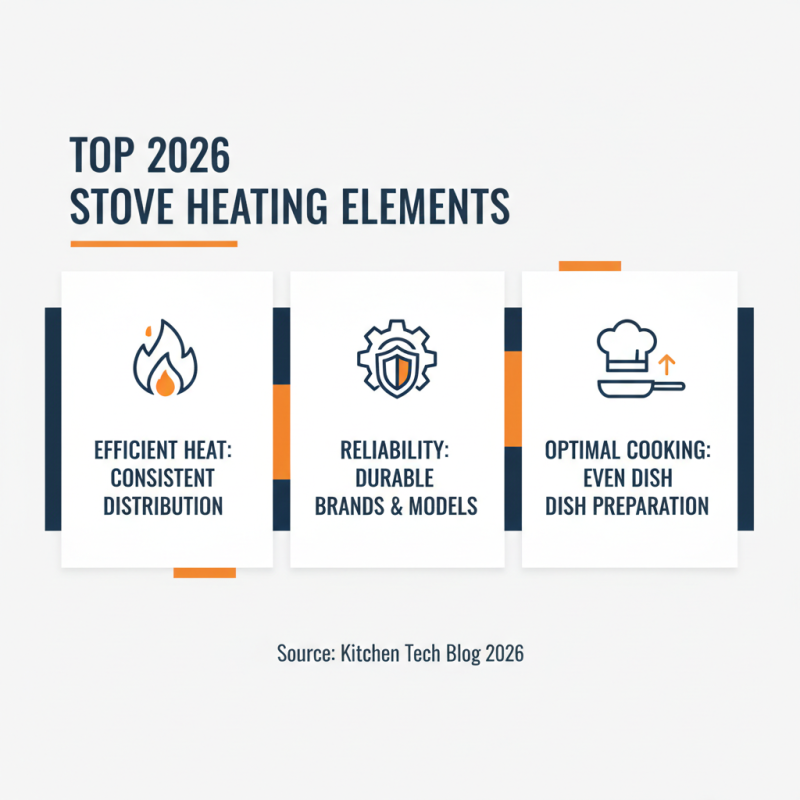
When selecting stove heating elements for your kitchen, efficiency and reliability are paramount. Many brands in 2026 offer a wide range of models, but it's essential to focus on the features that meet your cooking needs. Look for elements that provide consistent heat distribution. This helps in preparing your favorite dishes evenly.
Consider the wattage of the heating elements. Higher wattage means faster heating, which can be ideal for busy cooks. However, balancing power and control is key. Some elements might heat up too quickly, making it difficult to simmer delicate sauces. Assess your cooking style before making a choice.
**Tips:** Always check for compatibility with your stove. Elements that fit poorly can lead to inefficiency. Regular cleaning and maintenance can extend the life of your heating elements, though some stains may be stubborn. Reflect on your cooking habits. Are you using your stove effectively, or are there improvements needed?
Key Features to Consider When Choosing a Heating Element
When choosing a heating element for your kitchen, consider several key features.
Size and compatibility are crucial.
Ensure the element fits your stove and suits your cookware. A mismatch can lead to inefficiency.
Look for elements that provide even heat distribution. This feature prevents hot spots that can burn food.
Another important aspect is energy efficiency.
An efficient element saves money on your utility bills. It also heats your food faster.
Additionally, consider materials like ceramic or metal. Each has its own benefits.
Some may heat up quickly, while others retain heat longer.
Assess your cooking habits and needs.
Temperature control is vital. Elements with precise settings allow for better cooking results.
You might be tempted by high wattage for faster cooking.
However, this can lead to overcooking if not monitored.
Lastly, read reviews to gauge reliability. User experiences can provide valuable insights.
Maintenance Tips for Prolonging the Life of Your Stove Heating Element
Maintaining your stove heating element is crucial for optimal performance. Regular care can extend its lifespan significantly. According to industry reports, a well-maintained heating element can last up to 15 years under regular use. In contrast, neglect can reduce that lifespan dramatically. Cleaning spills promptly reduces wear and tear. Residue buildup can create hotspots, leading to uneven heating.
Check the element for damage frequently. Signs like discoloration or cracks can indicate wear. Experts recommend replacing any damaged components immediately. Doing so ensures safety and efficiency. Also, avoid using the stove when it's empty. This practice can overheat the element, causing premature failure.
Consider investing in high-quality cookware. Using cookware that is compatible with your stove type can enhance heating efficiency. To maintain performance, keep cookware clean and in good condition. A small investment in care can lead to significant savings over time. Industry professionals emphasize the importance of routine checks for optimal results.

 +852 60984748