What is an Electric Heating Element and How Does It Work?
Electric heating elements are essential components in many heating applications. They convert electrical energy into heat through resistance. According to Dr. Emily Parker, an expert in thermal technologies, "The efficiency of an electric heating element can significantly affect overall energy consumption." This highlights the importance of understanding how they function.
These elements are found in various devices, from toasters to industrial furnaces. Each element operates differently, yet the basics remain the same. They generate heat when electric current passes through them. This conversion process seems simple, but many factors influence the effectiveness of an electric heating element.
In practice, challenges arise. Material quality, temperature control, and design flaws can reduce efficiency. An electric heating element's lifespan also depends on usage patterns. As we become more energy-conscious, we must question the efficiency of our heating methods. Exploring electric heating elements allows us to innovate and improve designs.

What is an Electric Heating Element? A Comprehensive Definition
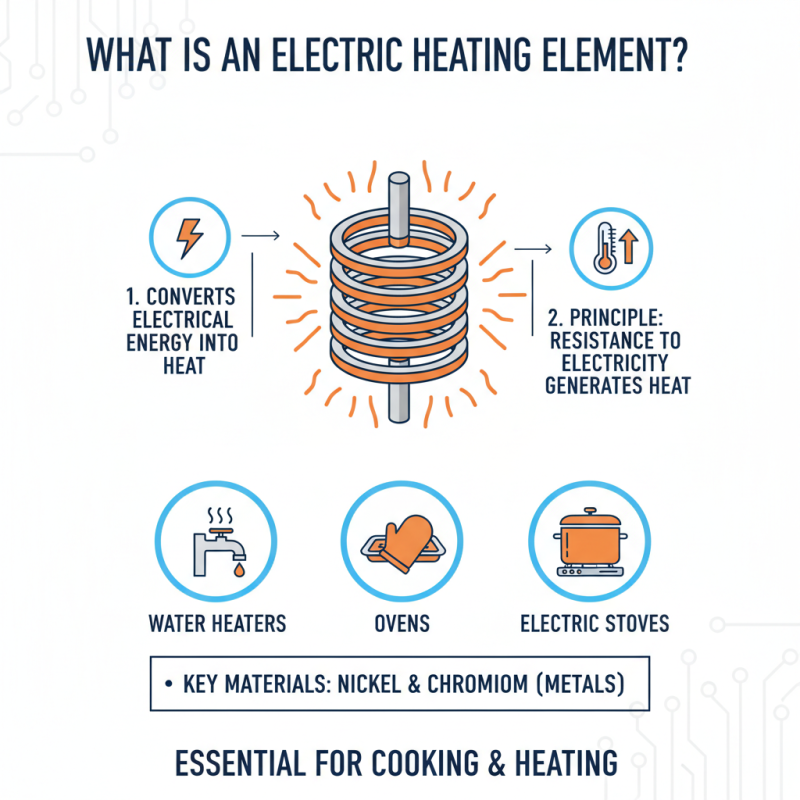
An electric heating element is a device designed to convert electrical energy into heat. These elements are widely used in various appliances, such as water heaters, ovens, and electric stoves. Typically made from metals like nickel and chromium, they resist the flow of electricity, generating heat in the process. When electricity flows through, the element heats up, transferring warmth to its surroundings. This conversion is essential in many daily tasks like cooking and heating.
Tip: When using heating elements, always ensure they are clean. Dirt can slow down their efficiency. Regular maintenance can prevent overheating issues.
Inconsistent heating can occur if the element is damaged. Look for signs of wear, like cracks or discoloration. If you notice any abnormalities, it's wise to replace the element. Ignoring these signs can lead to safety hazards. Make sure you follow proper procedures during the installation process, as improper handling may create risks.
Tip: Check your heating element regularly. A simple visual inspection can catch problems early, saving you from costly repairs.
The Principles of Electric Heating: How Heat Generation Occurs
Electric heating elements operate based on simple yet effective principles of heat generation. When electric current flows through a resistive material, it encounters resistance. This resistance converts electrical energy into heat. The heat generated is then transferred to the surrounding environment, whether it's air, water, or metal.
Materials used in these elements can vary, often including metals like nichrome. These materials are chosen for their ability to withstand high temperatures. The design of the heating element also plays a key role. A coiled design allows for better heat distribution. This shape increases the surface area, enhancing efficiency.
However, not all heating elements are perfect. Inefficiencies may arise due to poor insulation or aging materials. Regular maintenance is needed to ensure optimal performance. As elements age, their resistance can change, affecting heat output. Monitoring and replacing old components helps avoid energy wastage and potential hazards. Understanding these principles allows users to appreciate the art of electric heating.
Types of Electric Heating Elements and Their Applications in Industry
Electric heating elements come in various types, each suited for specific industrial applications.
Resistance heaters are popular due to their simplicity.
They convert electrical energy into heat through resistance. These elements are commonly used in process heating.
According to a recent industry report, resistance heaters account for over 30% of industrial heating applications.
Their reliability makes them a go-to choice for many manufacturers.
In contrast, infrared heating elements offer a faster heating option.
They emit radiant heat, warming objects directly rather than the surrounding air.
This technology is widely used in drying processes, coating applications, and even food preparation.
Anecdotal evidence suggests that infrared heaters can reduce energy consumption by up to
40% compared to traditional methods.
However, not all applications benefit equally from infrared technology.
It requires careful assessment to determine effectiveness.
Ceramic heating elements are preferred in high-temperature settings.
They can withstand extreme conditions and provide consistent performance.
In industries like aerospace and automotive, these elements often play a critical role.
Still, they may not be cost-effective for every scenario.
A detailed analysis should be done to weigh the benefits against investment.
Ultimately, the choice of heating element can significantly impact operational efficiency and energy use.
Efficiency Ratings: Understanding the Energy Consumption of Heating Elements
Electric heating elements convert electricity into heat. They are commonly found in various appliances, including heaters and ovens. Understanding their efficiency ratings is key to evaluating energy consumption. Energy efficiency is often expressed as a percentage of energy converted into usable heat. Higher efficiency can lead to lower electricity bills.
According to the U.S. Department of Energy, electric heating elements can range from 75% to over 95% efficient. However, this efficiency can change with use and maintenance. For example, dust buildup can reduce efficiency by 10% or more. Thus, regular cleaning is essential.
**Tips:**
Check the energy star ratings before purchasing heating elements. Consider insulation quality in your space, as it impacts overall heating efficiency. Always consult user manuals for maintenance advice to prolong your heating element's life.
What is an Electric Heating Element and How Does It Work? - Efficiency Ratings: Understanding the Energy Consumption of Heating Elements
| Heating Element Type |
Typical Power Rating (W) |
Efficiency Rating (%) |
Average Annual Energy Consumption (kWh) |
Applications |
| Induction Heating Element |
1500 - 3000 |
85 - 90 |
300 - 600 |
Cooktops, Industrial Heating |
| Resistive Heating Element |
1000 - 2000 |
70 - 80 |
400 - 800 |
Water Heaters, Space Heaters |
| Ceramic Heating Element |
500 - 1500 |
75 - 85 |
200 - 500 |
Space Heaters, Hair Dryers |
| Infrared Heating Element |
1000 - 2000 |
80 - 95 |
300 - 700 |
Heating Panels, Greenhouses |
Safety Standards and Regulations for Electric Heating Elements in Use
Electric heating elements are vital in modern appliances. They convert electrical energy into heat. However, safety is paramount when using these devices. Compliance with safety standards ensures consumer protection and device reliability.
Regulations vary by region but generally cover performance, efficiency, and materials used. For instance, improper insulation can lead to overheating. This poses a fire risk. Manufacturers must conduct rigorous testing to meet these safety criteria. A lack of adherence can have serious consequences.
Moreover, users should be aware of their heating elements' ratings. Using elements beyond their specified capacity can lead to failures. Periodic inspections help in identifying potential hazards. Safety is not just a guideline; it is an essential practice that must be followed to avoid mishaps.
Electric Heating Element Safety Standards and Usage Regulations

 +852 60984748