How to Choose the Right Stove Heating Element?
Choosing the right Stove Heating Element affects cooking speed, energy use, safety, and long-term repair costs. A glowing coil may look simple, but its wattage, resistance, dimensions, terminals, and temperature limits must match the appliance.
The U.S. Department of Energy reports that induction cooking transfers roughly 85% of its energy to cookware. Conventional electric resistance cooking transfers about 75% to 80%. Gas cooking transfers near 32%. These figures show why element design matters, even when the visible result is only a hot pan. The International Energy Agency also identifies appliance efficiency as an important part of reducing household electricity demand.
Fit is not enough.
John Drengenberg, former Consumer Safety Director at UL Solutions, has emphasized, “Never assume a replacement part is safe because it fits.” This principle applies directly to Stove Heating Element selection. A reliable choice should match the manufacturer’s model number, voltage, wattage, mounting pattern, sensor position, and connector design. Check the old element beside the replacement. Compare the terminal angle. Inspect burned insulation, loose wires, and warped supports.
Real kitchens are less predictable than product charts. A high-wattage element may heat faster, yet overload a circuit or damage control components. A lower-wattage option may seem economical, but cooking can become uneven and frustrating. Some recommendations also overlook altitude, cookware thickness, or repeated thermal cycling.
This guide examines those details. It uses manufacturer specifications, safety guidance, and recognized energy data. The goal is practical judgment, not a perfect formula. Sometimes, replacing the entire appliance is safer than forcing one more repair.
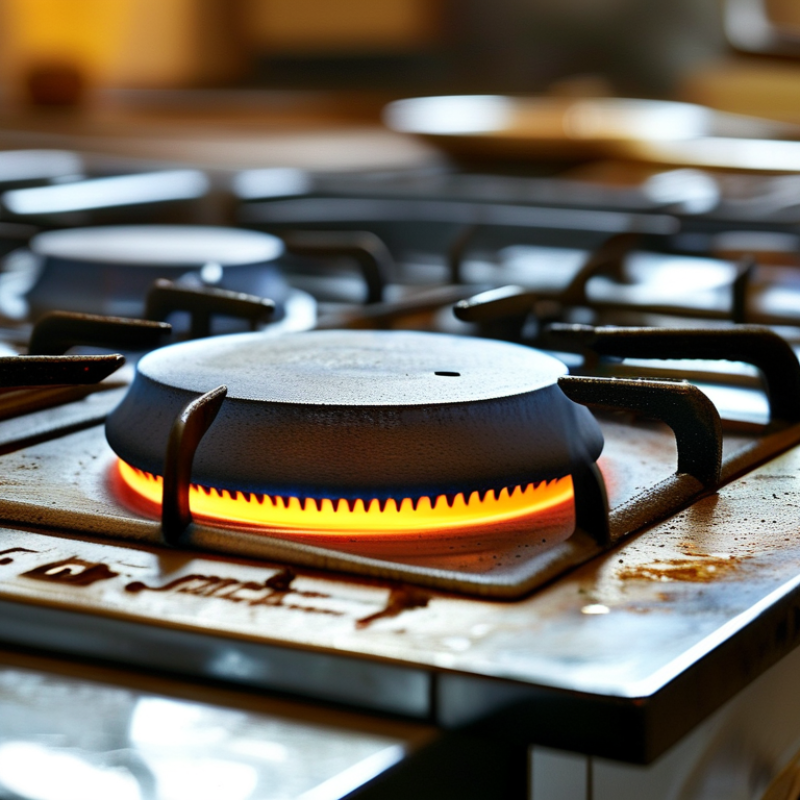
Identify Your Stove Type and Heating Element Design
Choosing a stove heating element starts with identifying the stove type. Gas cookers use burner caps and igniters, not electric surface elements. Coil stoves expose spiral resistance coils. Smooth-top electric stoves hide radiant elements beneath ceramic glass. Induction cookers use magnetic coils and require compatible cookware.
Look underneath the control panel or remove the rear cover carefully. Record the element’s diameter, wattage, voltage, terminal shape, and mounting clips. A 6-inch radiant element cannot replace an 8-inch element simply because both appear circular. Check the glass opening too. Design details matter.
The U.S. Department of Energy reports that induction cooking can transfer about 85% of energy to cookware, compared with roughly 32% for gas. The U.S. Energy Information Administration’s Residential Energy Consumption Survey identifies cooking as a smaller, but measurable, household energy use. These figures help explain why element design affects daily performance. Induction heats the pan directly. Radiant elements heat glass first. Coil elements respond quickly, but may create uneven contact.
Do not trust appearance alone. I once treated matching wattage as proof of compatibility. That assumption was wrong. Sensors, connectors, and temperature controls can differ. Measure twice. Check the appliance service manual and the element’s technical specifications before ordering. If the ceramic surface is cracked, stop using the stove and arrange qualified inspection. Personal experience helps, but verified specifications remain more reliable.
Verify Safety Standards and Manufacturer Compatibility
Choosing the right stove heating element starts with safety, not appearance. In practical servicing, a similar-looking element can have different voltage, wattage, terminals, or temperature controls. Check the appliance model number and the original element’s specifications. Confirm every detail.
Safety standards matter
because heating elements handle high temperatures and substantial electrical loads. NFPA’s Home Cooking Fires report estimated 167,800 U.S. home structure fires annually from 2017 to 2021, with cooking equipment involved. A certified replacement should meet the applicable household cooking appliance requirements, such as IEC 60335-2-6 or the relevant national standard. Look for a legitimate certification mark and verify it through the certifying organization’s database. A printed symbol alone proves little.
Manufacturer compatibility is equally important.
Compare the replacement’s voltage, wattage, resistance, mounting brackets, connector shape, and thermal protection. A higher-wattage element may heat faster, but it can overload wiring or controls.
Never force a connector.
Never bypass a limiter.
Disconnect power before inspection. For built-in appliances, use a qualified technician when access is unclear. I have found that visual matching creates false confidence. The element may fit the opening while failing electrically. That is the part many shoppers miss. Keep the old component until testing is complete, and photograph its connections before removal. Mistakes happen, especially when model numbers are partly worn. Check twice.
Install, Test, and Maintain the Replacement Element
Choosing the right stove heating element starts with the appliance’s rating plate. Match voltage, wattage, shape, terminal position, and mounting brackets exactly. A similar-looking element may heat unevenly or overload the circuit. The U.S. Consumer Product Safety Commission’s NEISS data estimate about 190,000 cooking-product injuries annually during 2017–2019. Safe replacement work matters.
Switch off the circuit breaker, then verify zero voltage with a rated tester. Do not rely only on the control knob. Photograph the wiring before removal, and replace damaged ceramic connectors or burnt wires. Tighten terminals firmly, but avoid crushing them. I once focused on the element and missed a loose terminal. It worked briefly. That was a poor check.
After installation, test the element at a low setting first. Watch for uneven glowing, unusual smells, sparking, or delayed heating. Stop immediately if any appear. NFPA’s Home Cooking Fires report states that cooking equipment was involved in 53% of reported home fires from 2017 to 2021. Keep pans, grease, and cleaning liquids away during testing. For maintenance, wipe spills after the surface cools, inspect terminals during servicing, and never cover the element with foil. Record the replacement date and measured symptoms. A professional inspection is sensible when wiring insulation is brittle or breaker trips continue.
How to Choose the Right Stove Heating Element?
Install, Test, and Maintain the Replacement Element
This chart shows the calculated cold resistance for representative 240 V heating-element ratings.
Resistance is calculated with Ohm’s law: R = V² ÷ P. Before testing or replacing an element,
disconnect power, confirm the voltage and wattage on the appliance rating plate, and compare the measured
resistance with the expected value. A reading of infinity usually indicates an open element, while a near-zero
reading may indicate a short circuit. Actual resistance can vary slightly because heating elements change
resistance as they heat.

 +852 60984748