 +852 60984748
Leave Your Message
Choosing the top Electric Heating Element manufacturers worldwide requires more than comparing catalog prices. Performance depends on alloy selection, watt density, insulation, sealing, temperature control, and production consistency. A heater that survives a dry industrial oven may fail quickly inside a compact water tank. Small details matter, including terminal quality, sheath thickness, surface finish, and resistance stability after repeated heating cycles.
Michael Faraday wrote, “Nothing is too wonderful to be true, if it be consistent with the laws of nature and experiment.” His principle remains valuable when assessing heating-element suppliers. Reliable manufacturers should support claims with test data, traceable materials, thermal-cycle results, and clear quality procedures. Certifications can help, but they do not replace practical evidence. Buyers should examine factory capability, engineering support, customization experience, and after-sales response. A polished website proves little.
This guide compares leading manufacturers across industrial, commercial, domestic, and specialized applications. It considers tubular heaters, cartridge heaters, strip heaters, ceramic elements, immersion heaters, and flexible heating solutions. The ranking is not absolute. Application, region, budget, and delivery requirements can change the best choice. Even experienced engineers can overlook installation conditions or airflow limitations. That weakness deserves attention. We will therefore examine measurable strengths, possible trade-offs, and the situations where each manufacturer performs best. The goal is not to promote the largest name. It is to identify dependable partners for safe, efficient, and repeatable heat generation.
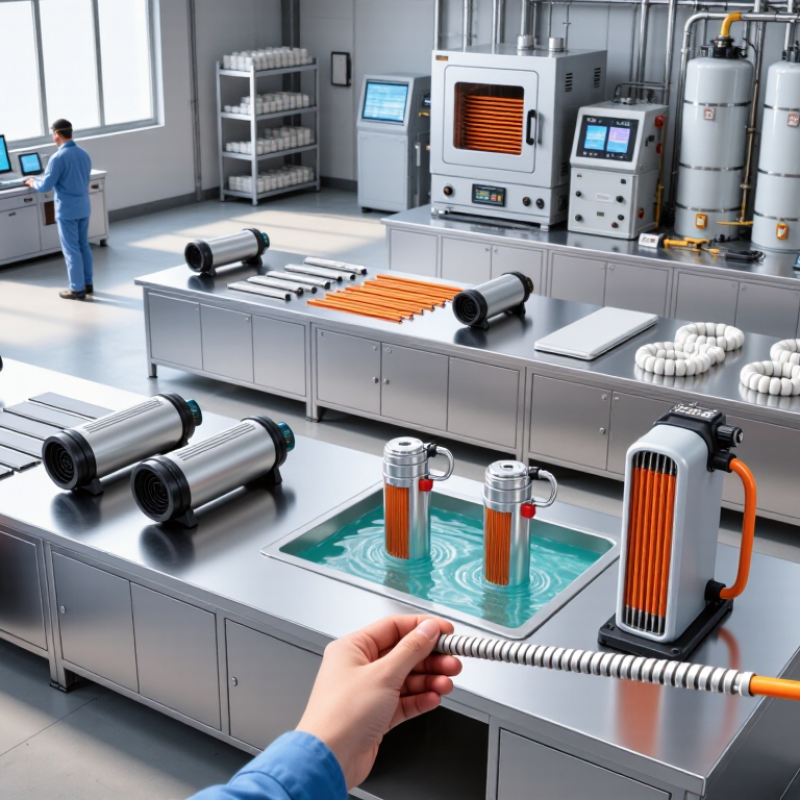
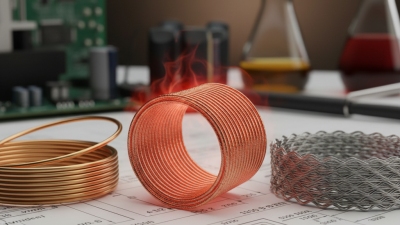
An electric heating element converts electrical energy into heat through resistance. When current passes through a resistive wire or strip, the material warms up. The principle is simple. The finished component is less so. Its design must manage temperature, electrical insulation, and heat transfer in a specific space.
Many elements use resistance alloys formed into coils or embedded in ceramic. A metal sheath may protect the coil, while compact air gaps or insulating powders limit unwanted electrical contact. In an oven, heat may reach food through radiation and moving air; in a water heater, the surrounding liquid carries heat away from the element. These details affect warm-up time and temperature consistency. A small coil can glow hot, but that does not mean it suits every application.
In practical equipment, voltage, wattage, shape, and airflow all matter. An undersized element may heat slowly, while poor airflow can create local hot spots. That is easy to miss. A simple drawing often makes heat flow look uniform, though real assemblies have edges, joints, and changing loads. Controls such as thermostats can regulate operation, but they cannot correct a poorly matched element or inadequate insulation. Engineers therefore consider the material, enclosure, and operating conditions together. The best choice depends on where the heat must go.
Electric heating elements convert electrical energy into heat, usually through resistance in a conductive material. The table compares common element types and applications; it is a product overview, not a company ranking.
| Element type | How it works | Common construction | Typical applications | Key selection considerations |
|---|---|---|---|---|
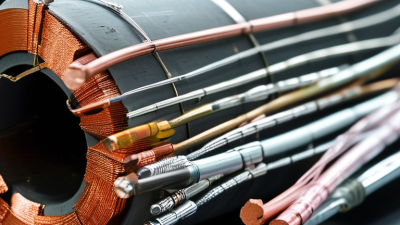
| Tubular heater | Current heats a resistance wire inside a metal tube; compacted electrical insulation transfers heat to the sheath. | Resistance-alloy wire, mineral insulation, and a metal sheath; formed into straight, bent, or shaped sections. | Ovens, tanks, air ducts, appliances, and industrial process equipment. | Heated medium, sheath compatibility, watt density, shape, and operating temperature. |
| Cartridge heater | A compact resistance-heating assembly transfers heat from a cylindrical casing into a close-fitting bore. | Metal casing around an insulated resistance coil, with electrical leads at one end. | Molds, dies, packaging machinery, and heated platens. | Bore fit, insertion depth, heat distribution, lead protection, and temperature control. |
| Strip or band heater | An insulated resistance element heats a flat surface or wraps around a cylindrical surface. | Resistance wire or ribbon enclosed in a metal body, often with electrical insulation between the element and surface. | Barrels, pipes, tanks, and flat industrial surfaces. | Contact quality, surface shape, clamping, insulation, and heat loss. |
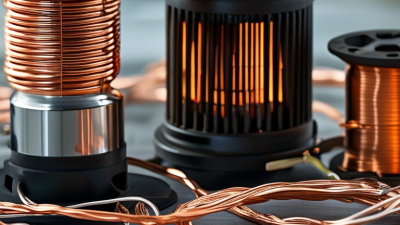
| Open-coil heater | An exposed resistance coil heats air directly as air flows across or around the wire. | Resistance wire supported by ceramic or other heat-resistant supports. | Air-handling equipment, process-air systems, and some drying applications. | Airflow, electrical protection, coil support, and prevention of contact with combustible materials. |
| Silicone rubber heater | A flexible resistance circuit produces heat across a bonded, flexible insulating surface. | Etched-foil or wire element laminated between silicone rubber layers. | Drums, batteries, enclosures, and equipment requiring flexible surface heating. | Surface attachment, bend radius, moisture exposure, insulation, and temperature sensing. |
| Ceramic heater | A resistance element embedded in or attached to a ceramic body heats the ceramic, which then transfers heat to the load. | Ceramic support or insulation paired with a resistance conductor. | Industrial furnaces, hot plates, and specialized process equipment. | Thermal shock resistance, operating environment, mounting, and temperature uniformity. |
| Quartz or infrared heater | An electrically heated source emits infrared radiation, transferring energy to surfaces in its line of sight. | A resistance element housed in a quartz tube or mounted in a radiant-heater assembly. | Surface curing, drying, space heating, and targeted process heating. | Target material, distance, line of sight, reflector design, and radiation intensity. |
General buying factors: supply voltage, required power, dimensions, operating environment, sheath or insulation material, temperature control, safety certification, and expected service life.