10 Hot Plate Heater Buying Tips for Global Buyers
Buying laboratory or industrial heating equipment across borders is rarely as simple as comparing prices. A reliable Hot Plate Heater must match the application, electrical system, workspace, and local compliance expectations. Global buyers should examine temperature range, heating uniformity, plate material, control accuracy, load capacity, and operating environment. A compact ceramic plate may suit a laboratory bench, while a larger stainless-steel model may better support production work. Small details matter.
Safety deserves practical attention. Check over-temperature protection, insulation quality, grounding, surface temperature warnings, and emergency shutoff features. Voltage and frequency must fit the destination country, not just the supplier’s standard model. Ask for test reports, user manuals, calibration information, and clear warranty terms. Certifications can support confidence, but buyers should verify their relevance with local authorities or qualified technical professionals. A printed certificate alone proves little.
Experienced purchasing teams also assess the manufacturer behind the product. Review factory records, quality-control procedures, replacement-part availability, and response times. Request sample photos or a live demonstration when specifications seem vague. Packaging should protect controls and ceramic surfaces from vibration during international transport. Incoterms, insurance, customs documents, and after-sales support can change the real purchase cost significantly.
There is no perfect checklist.
Even experienced buyers miss details. I would not choose a heater based only on wattage or attractive pricing. A slightly higher upfront cost may reduce downtime, safety risks, and replacement expenses. However, buyers should still challenge every claim, compare independent evidence, and document their final decision. The following ten buying tips provide a practical framework for evaluating performance, supplier reliability, and long-term value.
Understanding Hot Plate Heater Types and Their Applications
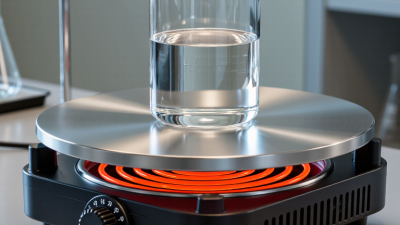
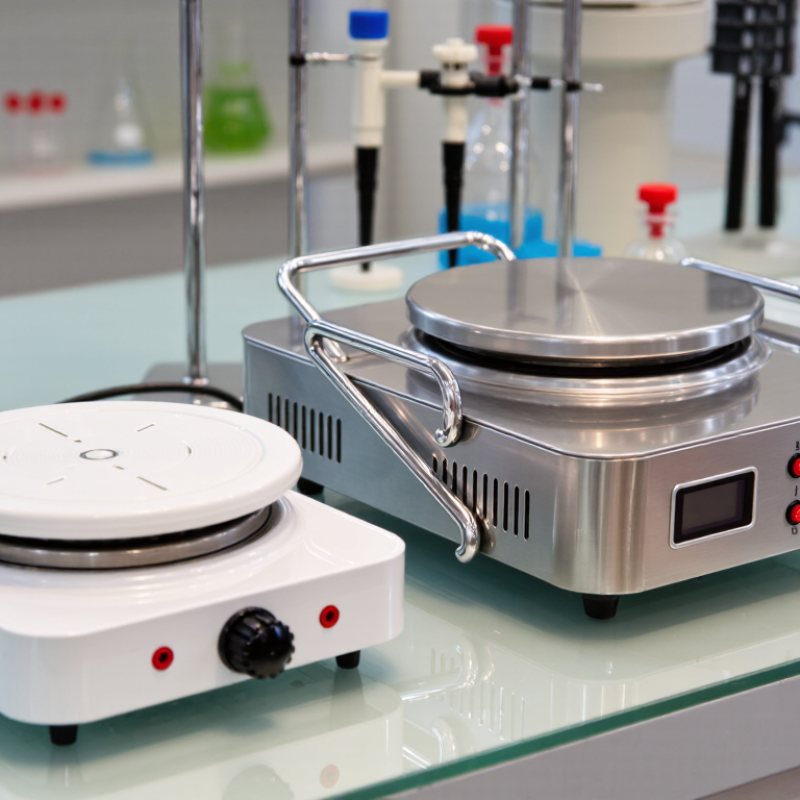
Hot plate heaters are not one-size-fits-all tools. Ceramic plates offer stable, even heating for glassware and routine laboratory work. Aluminum plates transfer heat quickly and suit metal containers, cooking tests, and industrial preparation. Stainless steel surfaces resist frequent cleaning and handle demanding environments. Some units combine heating with magnetic stirring, which helps maintain uniform temperature in liquid samples.
Application matters more than appearance. Choose a low-temperature model for warming wax, samples, or sensitive solutions. High-temperature units support evaporation, material testing, and controlled processing. For field work, compact heaters with clear controls are easier to transport. In production areas, a wider plate and stronger housing may improve daily efficiency. I have seen buyers focus on maximum temperature and overlook surface size. That mistake can slow every batch.
Tip: Check the vessel base before buying. A rounded or unstable container may heat unevenly, even on a precise plate. Confirm voltage, plug type, temperature accuracy, timer functions, and safety limits for your destination. Independent testing documents can support reliable purchasing decisions. Keep ventilation and heat clearance in mind. Do not trust vague specifications. Ask for operating tolerances and warranty conditions. A small uncertainty today may become a costly maintenance problem later.
Choosing the Right Heating Power, Temperature Range, and Controls
10 Hot Plate Heater Buying Tips for Global Buyers
Choosing the Right Heating Power, Temperature Range, and Controls
Heating power should match the vessel, liquid volume, and material. A 1,000–1,500 W unit suits many small laboratory vessels, while larger loads may need 2,000 W or more. The U.S. Department of Energy’s Industrial Decarbonization Roadmap identifies process heating as roughly 51% of manufacturing energy use. Efficiency deserves attention. More power is not always better.
Start with the load. For water-based work, ask how quickly one litre must reach 100°C. A 1,000 W heater theoretically needs about five minutes, ignoring heat loss and vessel weight. Real conditions take longer. I would not trust wattage alone. Insulation, plate material, room temperature, and airflow can change performance noticeably.
Temperature range and control quality matter more than attractive display numbers. Choose a range that covers low-temperature warming and high-temperature boiling, with stable adjustment near the target. IEC 61010-2-010 addresses safety requirements for laboratory heating equipment, including abnormal heating risks. Look for independent over-temperature protection and clear sensor placement. Controls matter.
Digital feedback is useful when resolution matches actual stability. A display showing 1°C steps may still produce wider swings. The IEA’s Energy Efficiency 2023 report recorded global energy-intensity improvement of about 2% in 2022, below the annual pace needed for stronger efficiency gains. That gap makes timer functions, automatic shutoff, and proportional control practical buying considerations. Voltage compatibility also matters across markets; confirm the rated voltage, frequency, plug, and replacement sensor availability before ordering.
Checking Materials, Safety Features, and Energy Efficiency
When global buyers inspect a hot plate heater, material quality deserves close attention. Stainless steel housings resist corrosion and tolerate frequent cleaning. Ceramic or glass surfaces should be even, crack-free, and firmly mounted. Look closely at handles, feet, and cable entry points. Small defects can become expensive problems.
Safety features must match the working environment. Choose models with overheat protection, stable non-slip feet, heat-resistant insulation, and clear temperature controls. A grounded plug and suitable fuse rating are essential. Safety matters most. Check the rated voltage and frequency for the destination market. Request test reports, user manuals, and traceable production information from the supplier. Local certification requirements may also apply.
Energy efficiency is more than a low wattage number. A reliable thermostat can cycle power accurately and prevent unnecessary heating. Good insulation reduces heat loss around the body and controls. An indicator light should show when the surface remains hot. Measure warm-up time, temperature stability, and standby consumption during sample testing. In practical inspections, buyers sometimes focus on maximum heat and overlook control accuracy. I have seen that mistake create uneven cooking and higher operating costs. A lower-cost unit may appear attractive, but weak insulation or unstable controls can change the calculation. Ask for performance data under realistic loads, not only laboratory conditions.
10 Hot Plate Heater Buying Tips for Global Buyers
Checking Materials, Safety Features, and Energy Efficiency
The chart shows the rated electrical power of common hot plate heater capacities and the energy consumed during one hour of continuous operation. A 1,000-watt heater uses approximately 1.0 kWh per hour at full power. Actual consumption may be lower when thermostatic control cycles the heater on and off.
- Confirm the heating plate material, such as cast iron, stainless steel, or glass ceramic.
- Check the rated voltage and frequency for the destination market.
- Choose the wattage according to cookware size and intended heating speed.
- Look for overheat protection and automatic thermal cutoff.
- Prefer units with stable, heat-resistant handles and insulated housing.
- Check whether the control knob or digital controller provides precise temperature adjustment.
- Verify grounding, plug configuration, and applicable electrical certifications.
- Inspect the power cord, strain relief, and overall enclosure quality.
- Consider thermostatic cycling or multiple power levels to reduce unnecessary energy use.
- Review cleaning requirements, warranty terms, spare parts, and user instructions.
Comparing Certifications, Supplier Reliability, and Total Costs
For global buyers, certification should match the destination market, not merely decorate a datasheet. Compare electrical safety evidence against IEC 60335-1 or the applicable product standard. Ask for test reports from an ISO/IEC 17025-accredited laboratory. The 2023 ISO Survey recorded 1,265,216 ISO 9001 certificates worldwide, but certification alone cannot prove consistent heater quality. Check the certificate scope, expiry date, factory address, and model number.
Supplier reliability appears in small operational details. Request three years of production records, warranty-return rates, spare-part lead times, and written temperature-control tolerances. The World Bank’s Logistics Performance Index 2023 evaluates customs, infrastructure, tracking, and delivery timeliness across 139 economies. Use those factors when comparing suppliers, especially for remote destinations. A fast quotation means little if replacement thermocouples take eight weeks. Test one sample first. Do not skip this.
Total cost includes more than the purchase price. Add certification testing, freight, import duties, installation, electricity, calibration, and disposal. The International Energy Agency’s Energy Efficiency 2023 report continues to show that efficiency improvements reduce operating pressure as energy prices fluctuate. A heater with better insulation may cost more initially but waste less power during long laboratory cycles. Still, efficiency claims need measured data. I once saw a low-cost unit fail after repeated thermal cycling; the apparent saving disappeared quickly. That judgment may be imperfect, so buyers should calculate costs over three to five years using local electricity rates and documented service assumptions.

 +852 60984748