
 +852 60984748


How Do Heating Elements Work in Espresso Machines? A Simple Guide for Buyers
2025-06-20
The heating element is more than just a hot part—it’s the engine that powers the espresso machine’s temperature control. But how exactly does it work?
Here’s a simplified explanation:
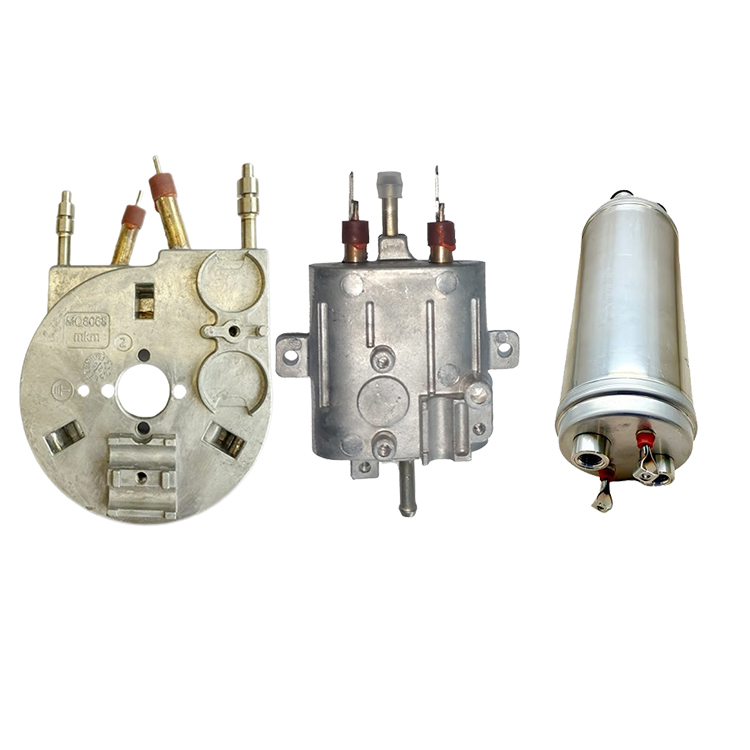
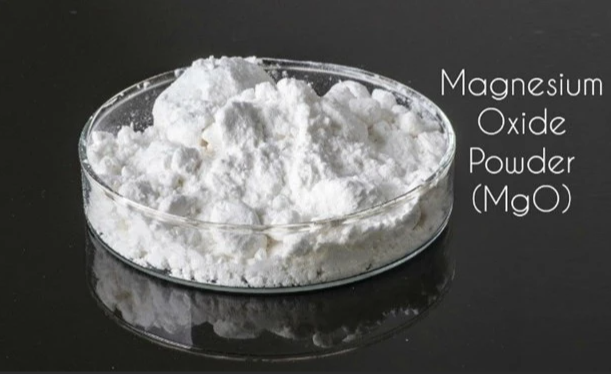
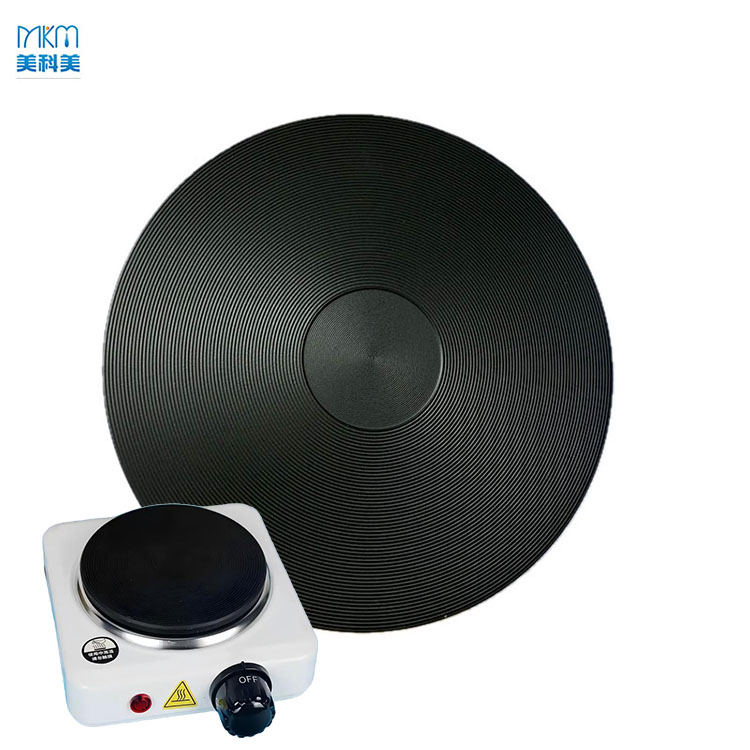
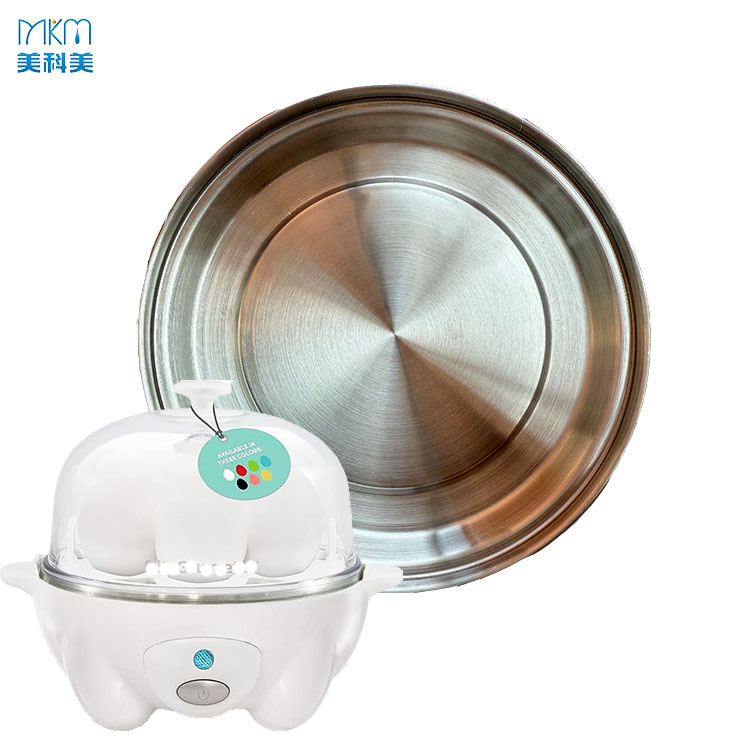
The heating element is usually a metal tube made from stainless steel, copper, or aluminum, with resistance wire (like nichrome) inside. When electricity flows through the wire, it creates resistance, which generates heat. This heat is transferred to the water inside the boiler or heat block.
In espresso machines, there are typically two systems:
-
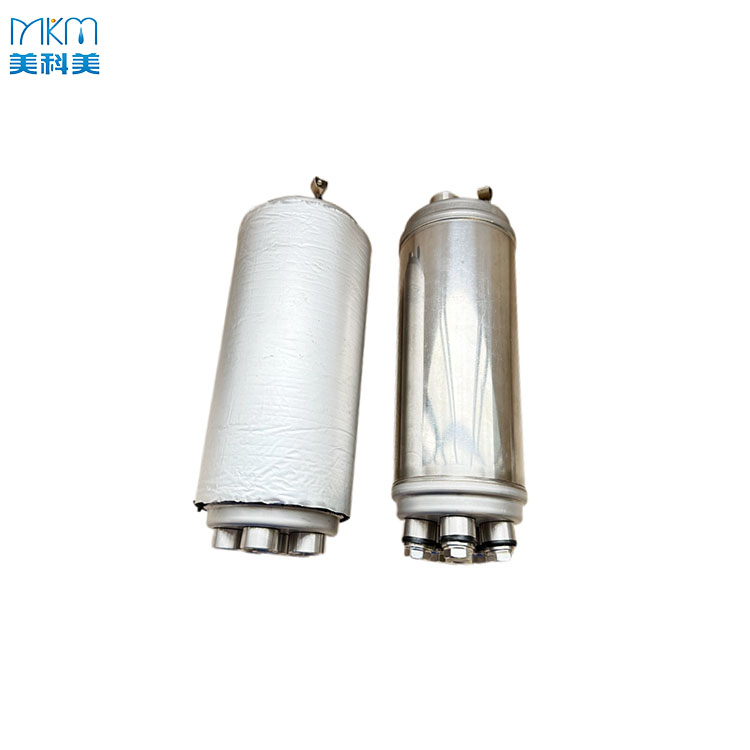
Boiler System: Water is stored and heated in a boiler tank using a tubular heating element. Best for consistent steam and heat retention.
-
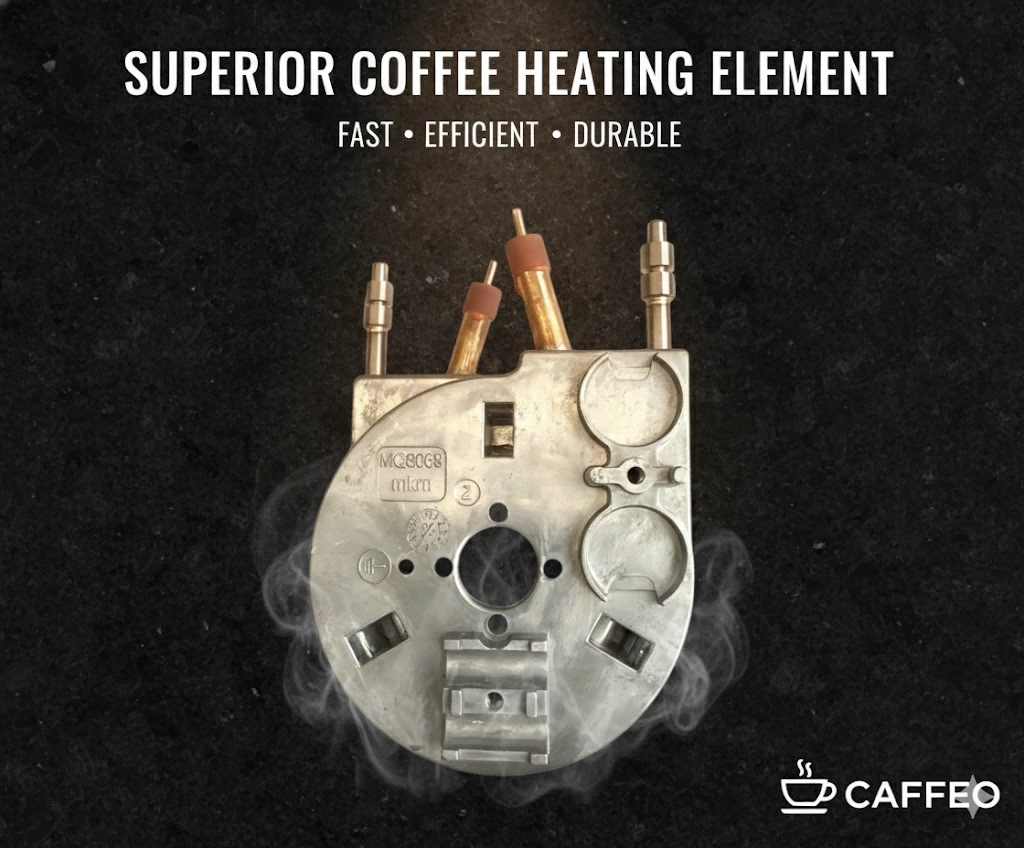
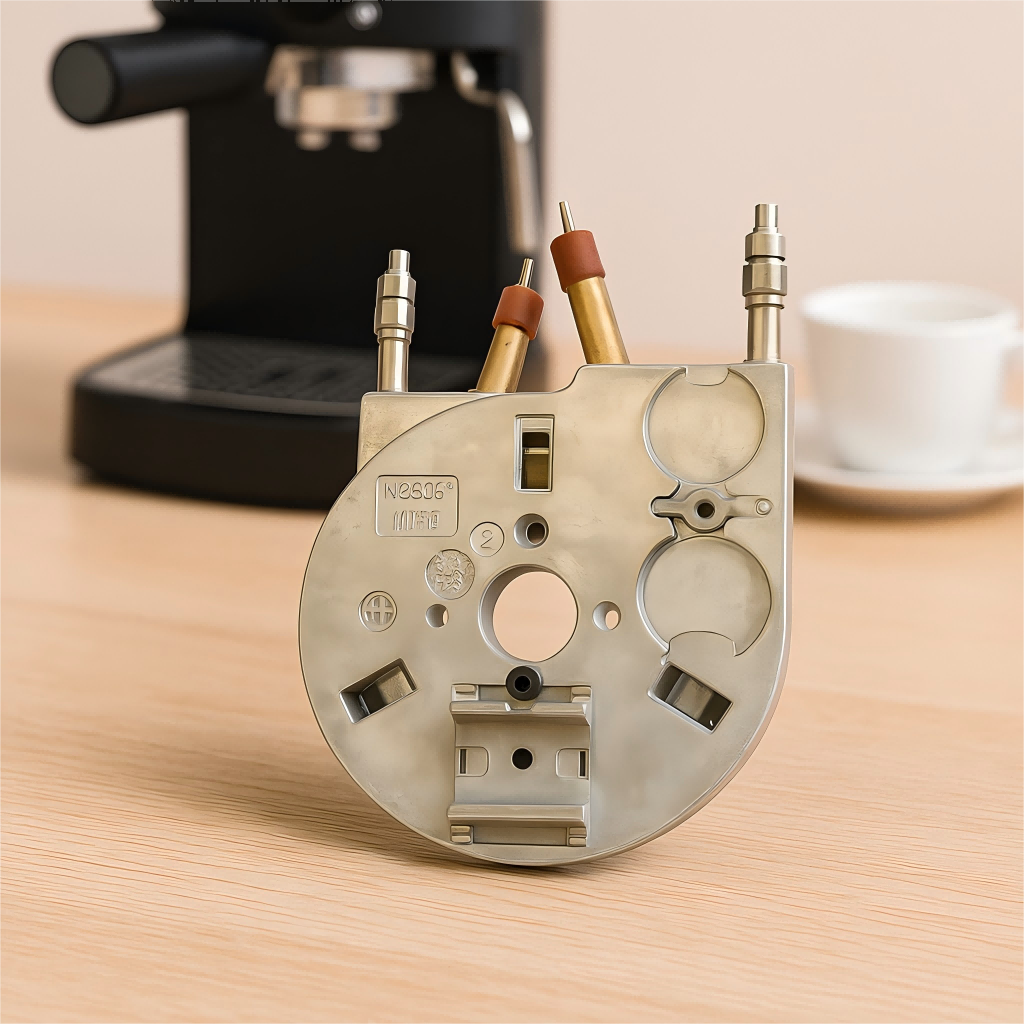
Thermoblock System: Water passes through a heated block. Heats water on demand—common in compact or home-use machines.
Some advanced machines feature:
-
PID Controllers: Maintain precise temperature by adjusting power to the heating element in real time.
-
Multiple Boilers: Separate boilers for coffee and steam, each with dedicated heating elements.
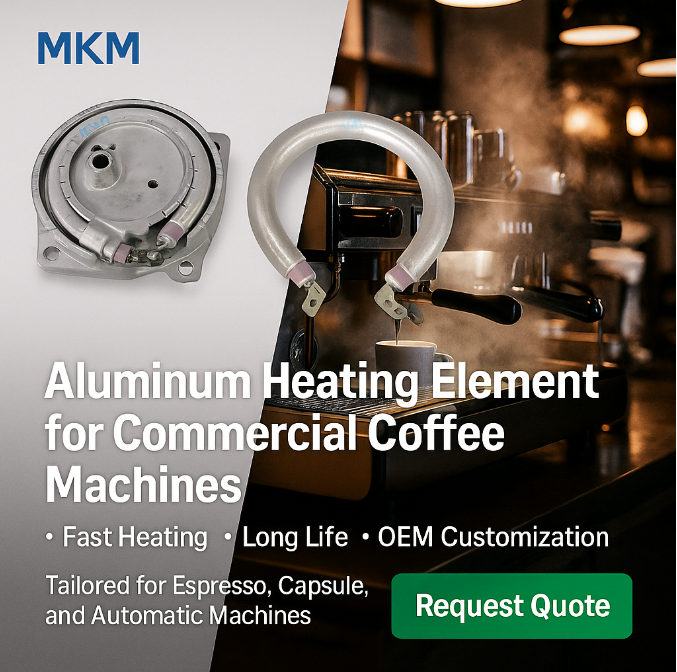
Choosing the right heating element depends on your machine type, size, and expected performance. For OEM buyers, working with a manufacturer that specializes in high-efficiency, corrosion-resistant heating elements—like aluminum tubular heaters—is key to long-term reliability.