How to Choose the Right Hot Plate Heater for Your Needs?
Choosing the right Hot Plate Heater can be challenging. Industry expert Dr. Jane Smith once said, "Understanding your needs is vital for effective heating solutions." This statement highlights the complexity of selecting the ideal hot plate heater for different applications.
When selecting a hot plate heater, consider variables such as size, power, and functionality. Some users prefer compact models for limited spaces, while others need high-capacity units for larger tasks. The right choice will depend on specific requirements and environments.
Thinking about safety features is crucial. Many products may lack essential safeguards. Evaluate the durability and reliability of the model you choose. Investing time in research can save future troubles. Remember, a perfect selection is not always easy, and mistakes happen.
Understanding the Different Types of Hot Plate Heaters Available
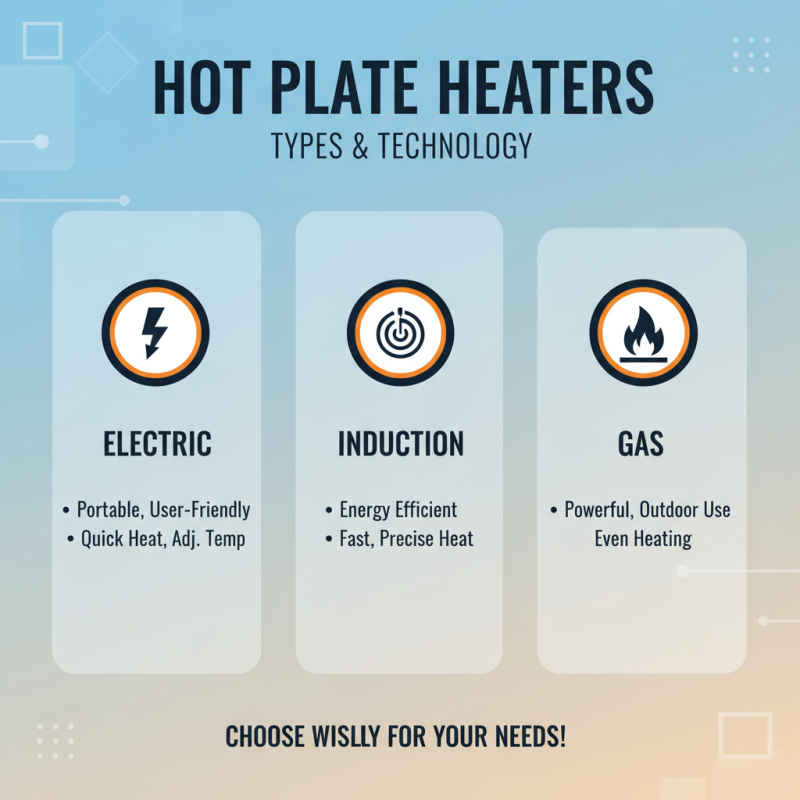
When choosing a hot plate heater, understanding the various types available is crucial. There are typically three main types: electric, induction, and gas hot plates. Electric hot plates are often portable and user-friendly, making them a popular choice for home kitchens. They can heat quickly and have adjustable temperature settings. However, they may consume more energy than other types.
Induction hot plates are highly efficient. They use magnetic fields to heat pots and pans directly, resulting in less wasted energy. According to the U.S. Department of Energy, induction cooktops can be up to 70% more efficient than traditional electric burners. Nevertheless, the requirement for compatible cookware can be a limitation for some users.
Gas hot plates offer precise temperature control. They are favored in professional kitchens for their instant heat and reliable performance. However, gas options may not be suitable for all spaces due to ventilation needs. In the 2022 Home Appliance Report, it was found that 30% of users feel overwhelmed by the selection process. This reflects the challenges many face in selecting the perfect heat source. Each option has unique benefits and drawbacks. It's essential to reflect on your specific needs before making a decision.
Assessing Your Heating Needs and Space Requirements
When choosing a hot plate heater, assessing heating needs and space requirements is crucial. Start by measuring the area you plan to heat. Small rooms might need less power, while larger spaces demand stronger units. Think about insulation too. A well-insulated room retains heat better, requiring a smaller heater.
Tips: Consider your layout. Open spaces can distribute heat unevenly. In contrast, if you have partitions, a smaller heater may suffice. Always keep airflow in mind. Blocked ventilation can lead to inefficiency.
Evaluate your heating duration. Will you use it for short bursts or prolonged periods? Some heaters excel at quick heating. Others maintain temperature effectively. Reflect on how frequently you'll need it. If it’s occasional, a simpler model may work for you.
Remember to balance functionality and safety. Avoid units that can overheat or pose fire risks. Yes, more features can be tempting, but extra features often complicate use. Think about user-friendliness, especially if you're not tech-savvy. It’s perfectly okay to reconsider your choices.
Key Features to Consider When Choosing a Hot Plate Heater
When choosing a hot plate heater, several key features are crucial.
Consider power output first. Standard models range from
1000 to 1800 watts. A higher wattage leads to quicker heating.
This is important in busy kitchens or labs. Research shows that temperature consistency can improve cooking
times by up to 30%. However, higher power can mean higher energy costs. It's a balancing act.
Next, look at the size and portability
of the device. Many users prefer lightweight options to easily maneuver them. Some hot plates have a
compact design, making them ideal for small spaces. A report from the American Society of Heating, Refrigerating
and Air-Conditioning Engineers notes that a portable hot plate can save space without compromising functionality.
But smaller units may have limited cooking surface areas.
That's a potential downside for larger meals.
Lastly, safety features should not be overlooked. Basic models may lack
automatic shut-off functions. This is a significant concern, especially
in a busy environment. Reports indicate that around 20%
of kitchen accidents stem from heating devices left unattended. Investing in a unit with safety mechanisms can
alleviate these risks, but often at the expense of size or power. Users need to weigh their options carefully.
Comparing Energy Efficiency and Cost of Operation
When selecting a hot plate heater, energy efficiency and cost of operation are crucial factors. According to the U.S. Department of Energy, electric hot plates generally consume around 1,500 watts. This means they can use approximately 1.5 kWh of energy for an hour of use. In contrast, induction cooktops are about 20-50% more energy-efficient than traditional electric burners. This distinction can lead to significant cost savings over time.
Operating costs also depend on local electricity rates. For instance, if the average cost of electricity is $0.13 per kWh, using a 1,500-watt hot plate for an hour would cost around $0.20. However, an induction stove only costs about $0.10 for the same usage due to its higher efficiency. Considering that regular use could lead to dozens of dollars saved each month, the initial investment could pay off in the long run.
Durability is another factor. Cheaper hot plates may have lower upfront costs, but they often lack longevity. Users might find themselves replacing them more frequently. These choices can reflect broader needs for reliability and performance. It's essential to evaluate both upfront prices and ongoing operating costs to find a balance.
Safety Considerations and Maintenance Tips for Hot Plate Heaters
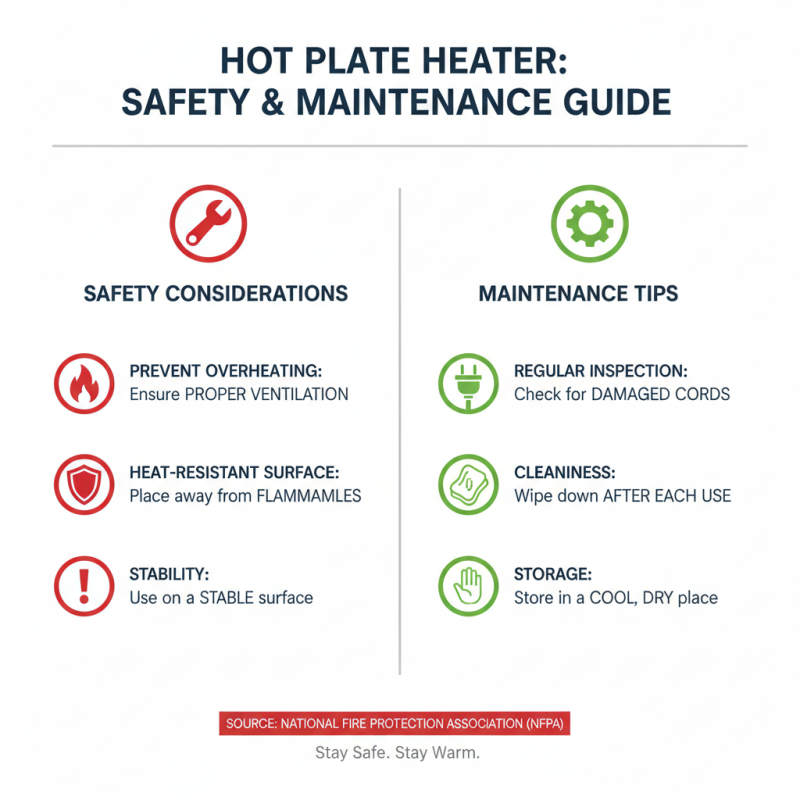
When using a hot plate heater, safety is a top priority. Overheated surfaces can lead to accidents or even fires. According to the National Fire Protection Association, cooking equipment is one of the leading causes of home fires. Ensure your hot plate has proper ventilation and can withstand high temperatures. Always place it on a stable, heat-resistant surface, away from flammable materials.
Maintenance is key to a long-lasting hot plate. Regularly inspect the unit for any signs of wear or damage. Clean it after each use to prevent build-up, which can affect performance. A study by the Consumer Product Safety Commission suggests that neglected appliances can lead to higher risks of malfunction. Consider calibrating your hot plate periodically, as inaccurate temperatures can lead to cooking mishaps.
Pay attention to the power requirements of your hot plate heater. Using an incompatible power source can lead to overheating. An inadequate power supply may not only hinder performance but can also damage the unit. Always refer to the manufacturer's guidelines for specifics on power connections and safety measures. Making informed decisions can enhance both safety and efficiency.

 +852 60984748